Key Takeaways
- Evaporation accelerates sharply in hot climates, draining pools, reservoirs, and soil moisture faster than most owners realize.
- Mulching, drip irrigation, rainwater harvesting, and moisture sensors deliver the biggest gains for landscaping and agriculture.
- Pool techs in Phoenix, Las Vegas, and inland California should budget for daily make-up water during summer route stops.
- Anti-evaporation coatings, geotextiles, and shade structures cut losses on open water surfaces.
- Superior Pool Routes has brokered routes since 2004 across Arizona, Nevada, Texas, and California — regions where evaporation defines summer service work.
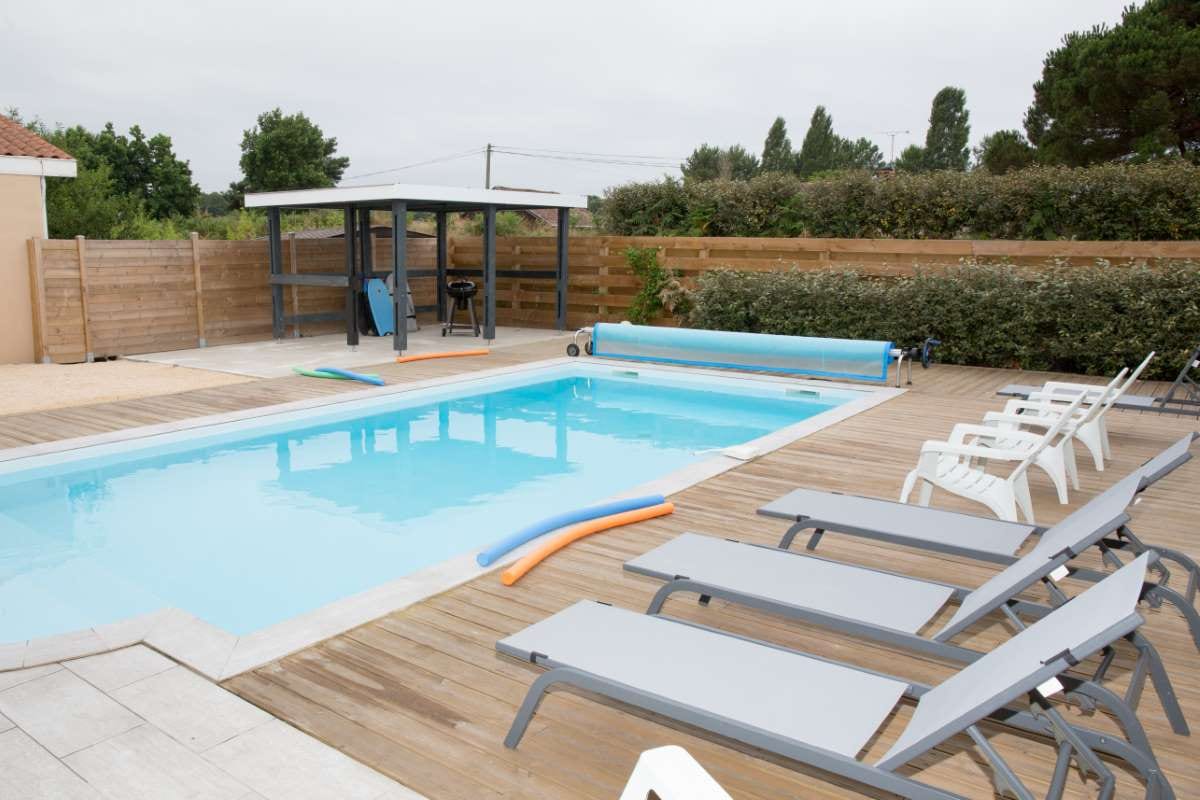
Evaporation is one of those quiet variables that decides whether a pool, a crop, or a reservoir stays healthy through the summer. In high-temperature regions, water that goes airborne never comes back, and the cost shows up in higher chemical use, sinking water tables, and bigger utility bills. For pool service operators working routes across Phoenix, Las Vegas, the Inland Empire, and central Texas, evaporation is a daily operational reality — pools can drop a quarter inch in a single afternoon when conditions are right, and that loss has to be replaced, balanced, and accounted for.
This post walks through what drives evaporation, how it affects the sectors most exposed to it, and the techniques that actually move the needle. The goal is practical: give route owners, landscapers, and water managers a clear picture of where their water is going and how to keep more of it on the property.
What Actually Drives Evaporation
Evaporation is the conversion of liquid water into vapor, and four variables control how fast it happens: temperature, wind speed, relative humidity, and exposed surface area. Heat gives water molecules the kinetic energy to break free of the surface. Wind sweeps that vapor away before the air saturates and slows the process. Low humidity keeps the air thirsty. A wide, flat surface — a pool, a reservoir, a freshly watered field — maximizes the area where exchange happens.
In desert climates, all four variables stack against the water owner. Daytime air temperatures above 100 degrees combine with single-digit humidity and steady afternoon wind. Pools in these conditions can lose a quarter to a half inch of water per day, and irrigation ponds can lose multiple feet over a single summer. Understanding which variable dominates in a given setting is the starting point for any management strategy, because the right intervention changes depending on whether wind, heat, or surface exposure is doing the most damage.
Evaporation and Agriculture
Farmers in arid regions have been wrestling with evaporation longer than anyone. The challenge is keeping soil moisture in the root zone where crops can use it, rather than letting it evaporate from the surface before plants ever touch it. When a field is irrigated and the sun is high, a significant portion of that water can be lost to the atmosphere within hours.
Mulching is one of the oldest and most effective responses. A layer of straw, wood chips, compost, or even gravel breaks the direct connection between soil and sun, dropping surface temperature and slowing the rate at which water leaves the ground. Inorganic mulches like plastic film or geotextile fabric do the same job and can be reused across seasons.
Drip irrigation is the other major shift. Instead of spraying water across the surface where most of it is exposed to heat and wind, drip lines deliver water directly to the root zone, often beneath a layer of mulch. The water that does get applied stays in the soil long enough for plants to take it up. Combined with subsurface emitters and timed delivery during cooler hours, drip systems make the most of every gallon pulled from a well or canal.
Water Conservation in Dry Regions
Conservation is more than a single technique — it is a layered approach that treats every drop as expensive. Rainwater harvesting captures the storms that do come and holds that water in cisterns or tanks for use during the dry months. A well-designed harvesting system on a residential lot can offset a meaningful share of summer irrigation demand, and on agricultural land the volumes get even larger.
Soil moisture sensors close the loop. Instead of running irrigation on a fixed schedule, sensors report what the root zone actually needs, and controllers respond accordingly. The result is fewer cycles, less runoff, and less water sitting on the surface waiting to evaporate. Pair this with weather-based controllers that skip irrigation events when rain is forecast or humidity spikes, and the savings compound through the season.
For homeowners, the same logic applies to landscape choices. Drought-tolerant plants, ground covers that shade the soil, and zoned irrigation that matches water delivery to plant need all reduce the surface area working against you.
Innovative Tools for Cutting Evaporation Losses
Beyond traditional methods, a growing set of products targets evaporation directly. Anti-evaporation coatings — thin, biodegradable films applied to the surface of reservoirs and irrigation ponds — slow water loss while still allowing oxygen exchange and sunlight penetration for aquatic life. These products have been deployed on agricultural storage ponds in Australia and the American Southwest with measurable reductions in seasonal losses.
For pools specifically, liquid solar covers are a related technology. They form a microscopic monolayer on the water surface that slows evaporation overnight, which is when pool water loss is most pronounced in low-humidity climates. Physical solar covers — the traditional bubble blanket — do the same job mechanically and also retain heat, which extends the swim season. Many route operators recommend covers for vacation homes and seasonal properties where pools sit unused for weeks at a time.
Geotextiles and woven landscape fabrics give agricultural and landscaping operations another tool. Laid beneath mulch or gravel, they suppress weeds, lock moisture into the soil, and provide a stable surface that resists erosion. The compound effect — less surface evaporation, less weed competition, healthier soil structure — adds up across a growing season.
Lessons From Regions That Got Serious
Australia is the obvious example. After repeated drought cycles, growers in the Murray-Darling Basin overhauled their water practices wholesale. Holistic strategies that combine mulching, efficient irrigation scheduling, deficit irrigation techniques, and crop rotation have allowed many operations to maintain yields with substantially less applied water.
In California, the response has shown up in residential landscaping. Xeriscaping — designing landscapes around drought-tolerant plants, gravel beds, and low-water ground covers — has spread across cities from San Diego to Sacramento. Homeowners who once maintained Kentucky bluegrass lawns now keep yards that thrive on a fraction of the water, and the local utilities have backed the transition with rebate programs for turf removal and smart controller installations.
Pool service operators have adapted too. In hot inland California markets, route techs now factor evaporation make-up into their weekly service stop, checking water levels and topping off pools as part of standard maintenance rather than treating it as a separate task. The economics of route ownership in these regions reflect that reality, and operators who understand the local water dynamics tend to retain customers longer.
Practical Steps for Property Owners and Operators
The toolkit for managing evaporation in hot climates is well established. Mulching covers soil and dramatically slows ground-level water loss. Drip irrigation targets water where it is needed and keeps it out of the air. Rainwater harvesting captures and stores what nature does provide. Soil moisture sensors prevent overwatering and keep schedules aligned with actual conditions. Anti-evaporation coatings and pool covers protect open water surfaces from the worst of the sun and wind.
For pool route operators, the operational pieces matter just as much. Service stops in high-evaporation regions should include a water-level check and a quick visual inspection of the autofill mechanism — a stuck or disconnected autofill on a property losing half an inch a day can run a customer's water bill into uncomfortable territory within a week. Educating clients on the role of a good cover, especially for vacation rentals and second homes, builds goodwill and reduces emergency calls.
Community and Education
Sustainable water use scales when communities buy in. Educational programs run by water districts, extension services, and conservation nonprofits give residents the information they need to change behavior — when to water, how to read a soil probe, why a layer of mulch matters. Workshops on efficient irrigation, drought-tolerant landscaping, and pool maintenance translate technical knowledge into practical habits.
Local collaborations between utilities, nurseries, and pool service businesses amplify the reach of these programs. A homeowner who hears the same message from their water bill insert, their landscaper, and their pool tech is far more likely to act on it.
Policy and Government Initiatives
Government policy shapes the field. Tiered water rates that charge more for heavy use, rebate programs for turf removal and irrigation upgrades, and grants for on-farm efficiency improvements all push behavior in the right direction. State and federal research funding underwrites the innovations — better sensors, improved coatings, more efficient emitters — that show up in the market years later.
Regulations that protect aquifers and surface water from over-extraction are the backstop. In regions where pumping has historically outpaced recharge, groundwater management agencies are now setting allocations and metering wells in ways that were politically unthinkable a decade ago. Operators and growers who have already invested in efficiency are better positioned as those rules tighten.
Where the Field Is Heading
Precision agriculture — combining satellite imagery, soil sensors, weather data, and machine learning to optimize water delivery field by field and even row by row — is moving from research plots to production farms. The same approach is finding its way into landscape irrigation and municipal water management. The promise is that every gallon gets accounted for and delivered where it can do the most work.
For pools and other open-water applications, expect to see continued refinement of cover materials, surface films, and shade structures designed to balance evaporation control with the practical needs of swimmers, ecosystems, and operators. The underlying physics will not change, but the tools for working around it keep getting better.
What Evaporation Means for Pool Chemistry
Water loss is only half the story. When a pool drops half an inch over a hot afternoon, the dissolved solids stay behind, which means hardness levels, alkalinity, and stabilizer concentrations climb every time the autofill kicks on with fresh tap water. Over a long, hot summer, calcium hardness in some Arizona and Nevada markets can climb to the point where partial drains become necessary just to keep scaling under control. Salt-chlorinated pools face an additional wrinkle: the salt does not evaporate with the water, so salinity readings rise unless make-up water is closely tracked.
Route operators who understand this dynamic build a rhythm around it. Routine testing of calcium hardness and cyanuric acid early in summer flags pools that may need a partial drain before chemistry slips out of range. Adjusting stabilizer at the start of the season, rather than dosing reactively in August, keeps chlorine working efficiently when UV exposure is at its peak. Customers appreciate techs who explain why a pool that looks clear still needs intervention, and that transparency tends to translate into longer customer tenure.
Shade, Wind, and Pool Design Choices
The same physics that govern fields and reservoirs apply to backyard pools. A pool sheltered by mature trees, a privacy wall, or a covered patio loses meaningfully less water than one exposed to open desert wind. Property owners building new pools in hot climates can lock in efficiency gains at the design stage by orienting the pool to take advantage of natural windbreaks, choosing tile and coping that limit heat absorption around the perimeter, and incorporating features like infinity edges thoughtfully — flowing water surfaces increase evaporation, so the aesthetic comes with a recurring water cost.
Variable-speed pumps and modern automation also play a role. Running circulation at lower speeds during the heat of the day reduces water agitation and the surface disturbance that accelerates evaporation, while overnight cycles handle the bulk of filtration work when ambient temperatures and wind are lower. Operators familiar with these settings can guide clients toward configurations that quietly cut both energy and water bills.
A Route Owner's Perspective
Managing evaporation is not a single fix — it is a set of habits and investments that compound over time. The science is straightforward, the techniques are proven, and the technology continues to improve. Whether the water in question is filling a pool, a field, or a reservoir, the principles overlap: reduce exposed surface area, break the heat-and-wind connection, deliver water efficiently, and measure what you are doing.
For entrepreneurs evaluating pool service businesses in hot, dry markets, evaporation is part of the operational picture from day one. The right route, in the right region, with the right service rhythm, builds a durable business even in climates where water is precious. Superior Pool Routes has brokered routes since 2004 in exactly these markets — Arizona, Nevada, Texas, and California — and works with buyers to find established accounts that fit their experience and goals. Visit Pool Routes for Sale to see what is available today.